
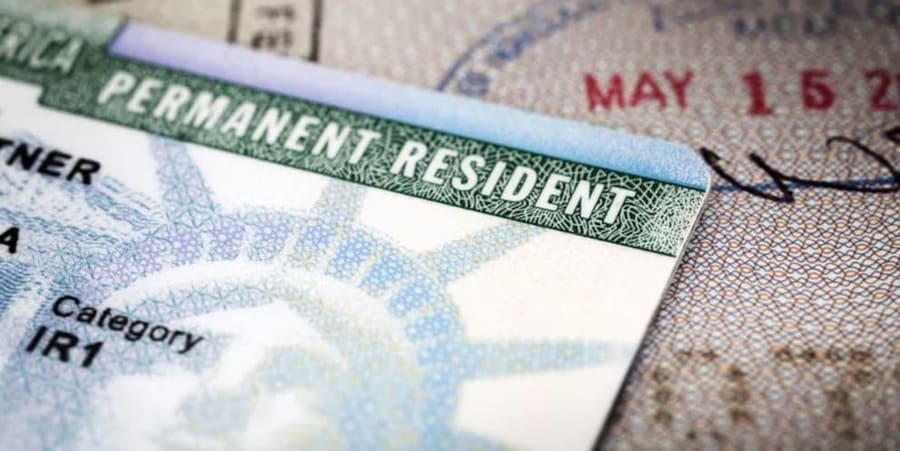
Many green card holders believe their status is secure once they get permanent residency. It is not. A green card can be revoked. In 2026, immigration enforcement is more aggressive than it has been in decades. As a result, more permanent residents are losing their green card than at any other time in recent history.
Here are the seven situations that put your green card at risk, and what to do about each one.
1. Spending Too Much Time Outside the United States
A green card gives you the right to live permanently in the U.S. But if you spend too much time abroad, USCIS and Customs and Border Protection can decide you’ve abandoned your residency.
Here are the rules:
- Absences of 6 months to 1 year trigger extra scrutiny. A CBP officer can question you at re-entry about whether you still live in the U.S.
- Absences of more than 1 year create a legal presumption that you abandoned your residency. You’ll generally be refused entry, and your green card could be confiscated.
What to do: if you need to be outside the U.S. for more than 6 months, file a Re-entry Permit (Form I-131) before you leave. It can protect your residency for up to 2 years.
2. Certain Criminal Convictions
Not all crimes lead to deportation, but many do. Here are the categories that can put your green card at risk, no matter how long you’ve had it:
- Aggravated felonies. This immigration-law category is broader than it sounds. It includes drug trafficking, fraud over $10,000, and crimes of violence with a sentence of one year or more, among others.
- Crimes of moral turpitude. This covers things like theft, fraud, and assault. It applies if committed within 5 years of getting your green card. It also applies to two or more such crimes at any time.
- Drug offenses. Almost any drug conviction can make you deportable. This includes marijuana, which is still illegal under federal law.
- Domestic violence convictions.
- Firearms offenses.
A critical point for 2026: the Laken Riley Act became law on January 29, 2025. It requires mandatory detention for certain noncitizens. This covers people charged with burglary, theft, larceny, shoplifting, or assault of a law enforcement officer. It applies even before any conviction.
Does this apply to green card holders specifically? That’s actually a disputed legal question right now. The law’s text ties mandatory detention to grounds that usually apply to people without legal status. It doesn’t clearly apply to someone already admitted as a permanent resident. Even so, immigration attorneys report that some judges have applied it more broadly in practice. If you’re a green card holder and you get arrested, don’t assume this law doesn’t apply to you.
What to do: if you’re arrested or charged with any crime, contact an immigration attorney right away — before your criminal case is resolved. Your criminal defense attorney and your immigration attorney need to work together.
3. Fraud or Misrepresentation on Your Application
Did you lie on your original green card application? Maybe about your identity, your criminal history, your marital status, or some other material fact. If USCIS discovers this, your green card can be revoked at any time — no matter how many years ago you got it.
In 2026, USCIS significantly expanded its use of social media review and data cross-referencing to catch past misrepresentations.
What to do: if you know of any inaccuracy in your original application, talk to an immigration attorney confidentially before the government finds it. In some cases, proactive disclosure is possible.
4. Failing to Notify USCIS of Address Changes
Green card holders must notify USCIS of any address change within 10 days, using Form AR-11. This requirement is rarely enforced on its own. But it becomes a serious problem when important notices go to your old address instead. This includes interview appointments, or documents that need a response. If you never see them, you can’t respond.
If you don’t respond to a USCIS notice, the consequences can be serious. Your application could be denied. Or your green card could be revoked, without you even knowing it was happening.
5. Not Filing U.S. Tax Returns
As a permanent resident, you must file U.S. federal income taxes as a U.S. tax resident. This applies even to income you earn abroad. If you consistently fail to file, that can be used as evidence you’ve abandoned your U.S. residency. This is especially true if combined with extended time outside the country.
6. Being Identified as a Security Risk
Under current 2026 enforcement policy, the federal government has more power to revoke green cards from people it identifies as national security threats. This can be based on ties to foreign governments, organizations, or activities the government considers contrary to U.S. interests.
This category has expanded significantly under executive-order enforcement. It has been applied to people with no prior criminal record. Green card holders from certain countries face heightened scrutiny.
7. Conditional Green Card — Failing to File Form I-751
Did you get your green card through a marriage that was less than 2 years old at the time of approval? Then you received a conditional green card, valid for 2 years. You must file Form I-751 (Petition to Remove Conditions on Residence) within the 90-day window before that card expires.
Miss that window, and your green card automatically expires. You become deportable — even if your marriage is completely genuine.
This is one of the most common, and most preventable, ways people lose their green card.
Frequently Asked Questions
Can a green card be revoked after 10 or 20 years?
Yes. There’s no statute of limitations on revocation based on fraud or certain criminal convictions. That said, long-term residency can be a mitigating factor an immigration judge considers.
If I become deportable, am I automatically deported?
No. You have the right to a hearing before an immigration judge. An immigration attorney can argue on your behalf for cancellation of removal, voluntary departure, or other forms of relief.
Does applying for citizenship protect me from deportation?
No — not until it’s final. You remain deportable until the moment you take the oath of citizenship. That said, becoming a citizen eliminates most deportation risks.
Received a Notice From USCIS or ICE?
If you’ve received a notice from USCIS or ICE, or you’re worried about any of these seven situations, don’t wait. Call the Law Office of John V. Martine to schedule a case evaluation with an immigration attorney — we handle these cases every day.
If you have received a notice from USCIS or ICE, or if you are concerned about any of these situations, contact our office today. We offer consultations and we handle these cases every day.